Mille Feuille Nabe Recipe
If you’re in search of a cozy, satisfying dish that brings everyone to the table, look no further than Mille Feuille Nabe. This delightful Japanese hot pot, thoughtfully layered with napa cabbage and thinly sliced pork, is as beautiful as it is delicious. Each bite offers a tender harmony of fresh cabbage and savory pork cooked gently in a simple dashi broth, making it an absolute winner on chilly evenings or for quick weeknight dinners. I adore how this dish transforms with every layer, inviting you to savor the textures and flavors that only Mille Feuille Nabe can deliver.
Ingredients You’ll Need
Making Mille Feuille Nabe is wonderfully straightforward because it relies on just a handful of essential ingredients. Each component plays a crucial role: the napa cabbage adds a crisp, fresh texture, the thinly sliced pork contributes rich, juicy flavor, and the dashi broth ties everything together with delicate umami. When combined thoughtfully, these ingredients create a comforting and elegant hot pot experience.
- Napa cabbage (5-6 leaves): Use fresh, crisp leaves for layering and softness after cooking.
- Thinly sliced pork belly or shoulder (8 ounces): Choose well-marbled slices for succulent flavor and tenderness.
- Dashi broth (2 cups): The soul of the soup, providing gentle umami depth.
- Soy sauce (½ tablespoon): Adds balanced saltiness that enhances flavors without overwhelming.
- Salt (½ teaspoon): Essential to bring out the natural tastes of the ingredients.
- Ginger slices (2): Introduces a subtle warmth and fragrant kick.
- Optional mushrooms (shimeji, enoki, shiitake): For added earthiness and variety.
- Optional carrot slices: Bright color and mild sweetness.
- Noodels (udon, ramen, or choice): Perfect for enjoying leftover broth later.
- Dipping sauces (ponzu, soy sauce, chili oil, shichimi togarashi): Customize your bite with flavorful dips.
How to Make Mille Feuille Nabe
Step 1: Prepare the Soup Base
Start by blending your dashi broth with soy sauce and salt. This simple seasoning makes a light but flavorful base that will slowly infuse into the cabbage and pork layers as they cook. Setting this aside allows the flavors to marry and creates the perfect foundation for your Mille Feuille Nabe.
Step 2: Layer the Napa Cabbage and Pork
Trim the ends of each napa cabbage leaf, then carefully layer the thinly sliced pork belly across each leaf, ensuring full coverage. This little step creates that signature “thousand-layer” effect. Repeat until all but one leaf have pork layers. The final cabbage leaf will serve as a lovely topping for the stack, giving the dish a beautiful finish.
Step 3: Assemble in the Pot
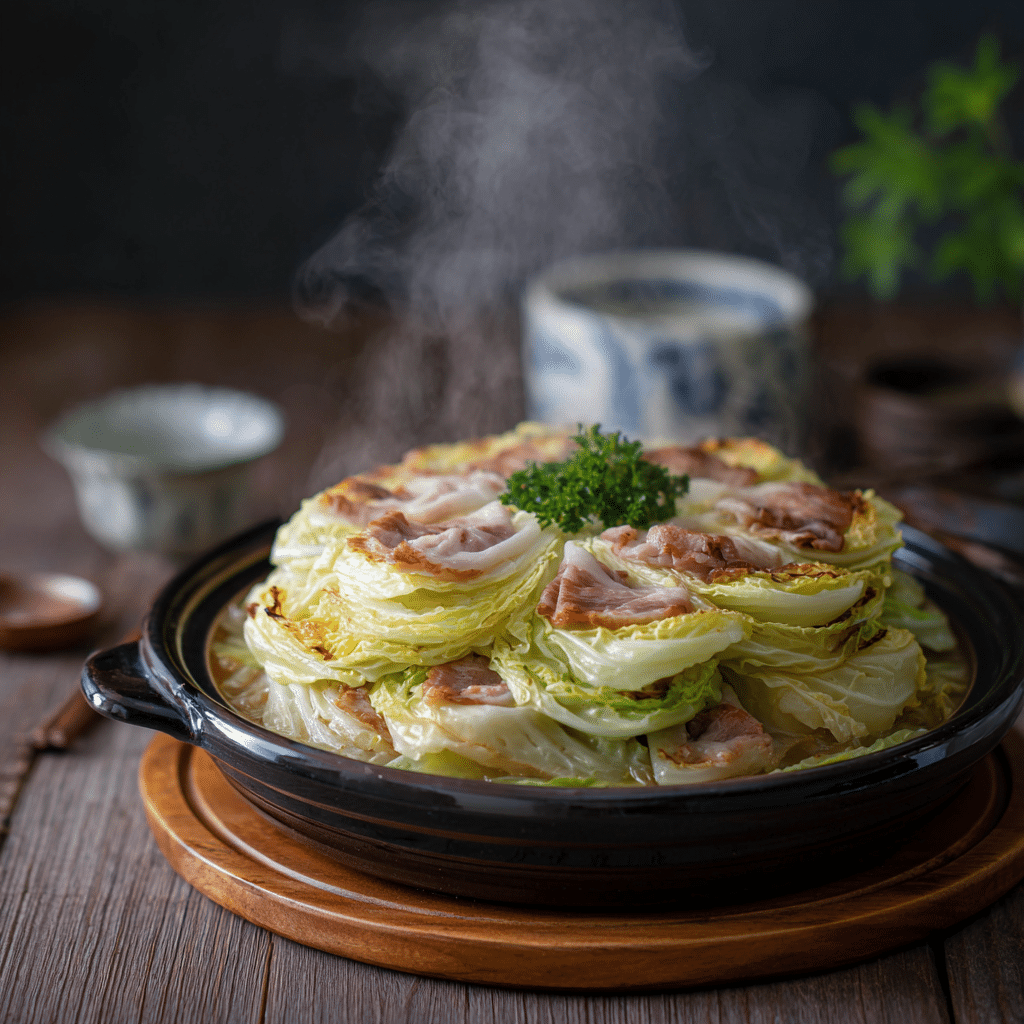
Stack the pork-layered napa cabbage leaves atop one another, finishing with the plain cabbage leaf on top, then slice the stack into roughly 2-inch sections. Neatly pack these slices vertically into a wide pot, like a donabe or large saucepan, starting from the edges moving inward. Keep the cut edges facing up for a visually stunning presentation. If you’re using mushrooms or carrot slices, tuck them into the center or on top, along with the ginger slices between layers.
Step 4: Cook the Mille Feuille Nabe
Pour the seasoned dashi broth gently over the packed layers, cover with a lid, and place the pot over medium heat. Bring it to a boil, then reduce to a gentle simmer, skimming off any scum that rises. Let it cook for about 5 minutes until the pork is fully cooked and the vegetables are tender but still hold their shape. This method locks in flavor without overcooking anything, giving you a hot pot that’s bursting with freshness.
How to Serve Mille Feuille Nabe
Garnishes
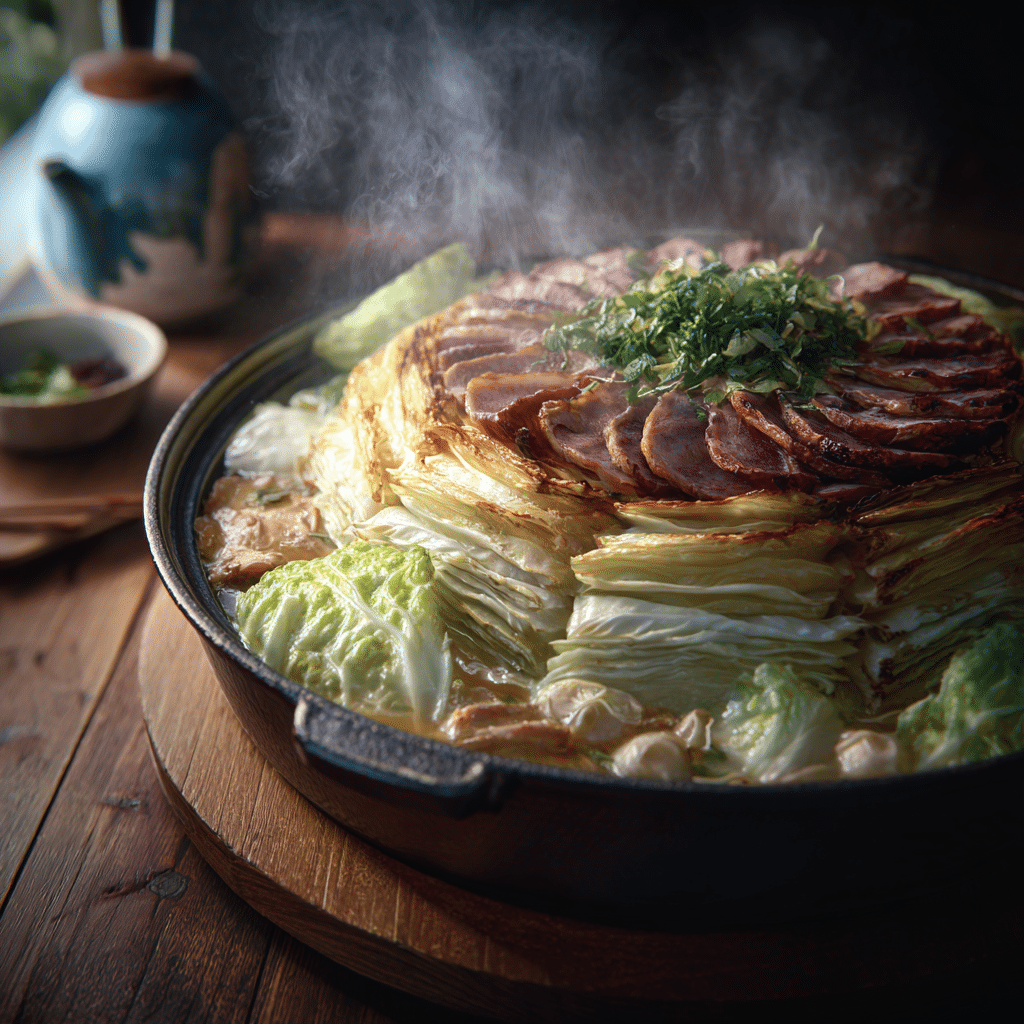
To elevate your Mille Feuille Nabe experience, offer a handful of garnishes like finely chopped green onions, a sprinkle of shichimi togarashi for a gentle heat, or a drizzle of fragrant Chinese chili oil. These finishing touches add layers of texture and flavor that complement the mild and savory profile of the hot pot beautifully.
Side Dishes
This dish shines best when enjoyed with simple sides. Light steamed rice or a crisp green salad balances the rich pork and comforting broth nicely. And don’t forget, after the main course, adding noodles or rice into the leftover broth yields an utterly satisfying shime that rounds out the meal perfectly.
Creative Ways to Present Mille Feuille Nabe
If you want to impress your guests, bring the Mille Feuille Nabe to the table on a portable burner for a charming interactive hot pot meal. Alternatively, slice the layered stack thinner for individual portions or add colorful vegetables between layers to create a striking visual effect. The elegance of the layered presentation makes it a true centerpiece on any dining table.
Make Ahead and Storage
Storing Leftovers
If you have leftovers, transfer them to an airtight container and refrigerate for up to two days. Keep the broth separate if possible to preserve the texture of the cabbage and pork, then reheat gently to enjoy without losing the delicate layers.
Freezing
Freezing Mille Feuille Nabe isn’t ideal because the layered vegetables may become mushy upon thawing. For best results, enjoy the dish fresh or store leftovers in the fridge instead. If you do freeze, separate the broth and solids and thaw overnight in the refrigerator before reheating gently.
Reheating
Reheat your Mille Feuille Nabe over low heat, ideally in a saucepan or donabe with the lid on, to gently warm the ingredients without drying them out. Add a splash of water or broth if needed to keep it moist. Avoid high heat as it can toughen the pork and overcook the cabbage.
FAQs
What is Mille Feuille Nabe exactly?
Mille Feuille Nabe is a Japanese hot pot named for its “thousand-layer” look, made by layering napa cabbage with thin slices of pork. It’s cherished for its simple ingredients that combine into a rich, comforting meal.
Can I use other types of meat in Mille Feuille Nabe?
Yes! While pork belly or shoulder is traditional due to its marbling and flavor, you can substitute with thinly sliced chicken or beef if you prefer. Just ensure it’s sliced thinly to cook quickly and layer easily.
What is the best broth to use for Mille Feuille Nabe?
Dashi broth is classic and provides a light, umami-rich base that doesn’t overpower the delicate layers. You can use homemade dashi or instant dashi powder dissolved in water for convenience.
How do I add noodles to Mille Feuille Nabe?
After you’ve enjoyed the pork and cabbage, add udon, ramen, or other noodles straight into the leftover broth and cook until tender. This shime step ensures none of the delicious flavors go to waste.
Is Mille Feuille Nabe healthy?
Absolutely! The dish is loaded with cabbage, which is nutrient-rich and low in calories, plus protein from pork. Using a light broth keeps it comforting without heaviness, making it a balanced meal.
Final Thoughts
Making and sharing Mille Feuille Nabe feels like a warm hug on a chilly day. Its layers of tender pork and cabbage swimming in savory broth offer more than just a meal—they provide comfort, warmth, and a little elegance, all in one pot. I can’t wait for you to try this recipe and make Mille Feuille Nabe a beloved staple in your kitchen, whether for cozy nights or lively gatherings with friends and family.