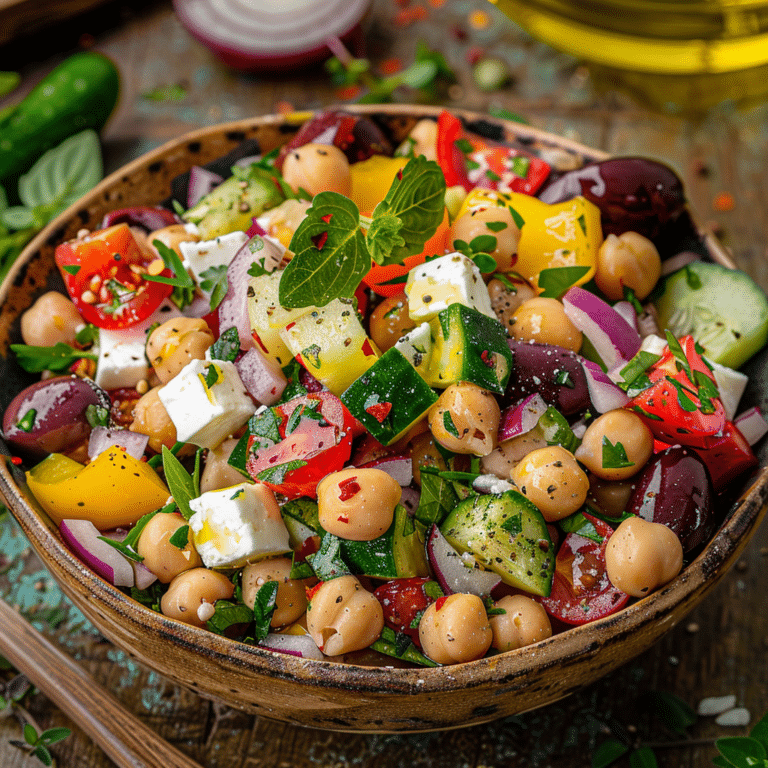
Greek Village Salad (Horiatiki)
If you have ever wanted to savor the essence of a sunny Greek afternoon in a bowl, this Greek Village Salad (Horiatiki) is your go-to dish. It is a rustic, vibrant salad that captures the heart of traditional Greek flavors through juicy tomatoes, crisp cucumbers, briny Kalamata olives, and creamy feta cheese, all bathed in fragrant golden olive oil. Every bite bursts with freshness and a delightful simplicity that feels like a warm invitation to the Mediterranean table. Whether you are looking for a quick lunch or a charming accompaniment to your dinner, this Greek Village Salad (Horiatiki) is a timeless classic that you will come back to again and again.
Ingredients You’ll Need
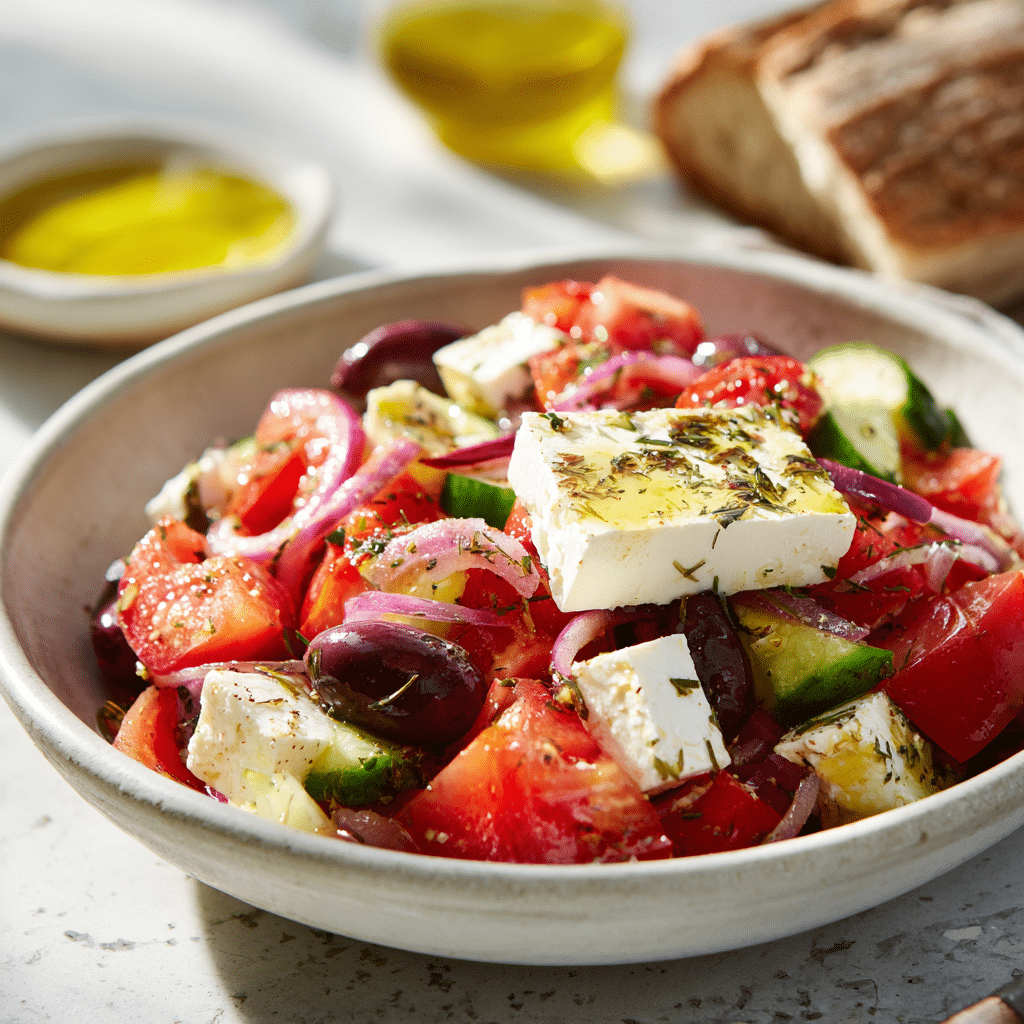
These ingredients are delightfully straightforward but essential to bringing the unmistakable balance of flavors and textures that define the Greek Village Salad (Horiatiki). Each item adds a unique touch — from the sweetness of ripe tomatoes to the tangy saltiness of feta and olives, making this salad a perfectly harmonious dish.
- 2 tomatoes, cut into wedges: Choose ripe, juicy tomatoes for that sweet, tangy base.
- 1 cucumber, sliced: Adds refreshing crunch and a cool contrast to the other ingredients.
- 1/4 red onion, thinly sliced: Offers a sharp, slightly sweet bite to balance the salad.
- 8 Kalamata olives: These olives bring a rich, briny depth and a signature Greek flavor.
- 50g feta cheese, cubed: Creamy and salty, feta ties everything together beautifully.
- 2 Tbsp olive oil: Use extra virgin for its fruity aroma and smooth taste, it’s the dressing’s heart and soul.
- 1 tsp dried oregano: A sprinkle of oregano adds an earthy, aromatic note that is unmistakably Greek.
How to Make Greek Village Salad (Horiatiki)
Step 1: Prepare Your Fresh Ingredients
Start by washing and thoroughly drying your tomatoes and cucumber. Cut the tomatoes into generous wedges to maintain their juiciness, and slice the cucumber into rounds that provide a crisp texture. Thinly slice the red onion so it complements without overwhelming. Having perfectly prepped veggies sets the foundation for a salad that’s both visually appealing and delicious.
Step 2: Arrange the Salad Base
Choose a shallow bowl and carefully arrange the tomatoes, cucumber slices, and red onion on the plate. Creating a colorful, inviting bed of fresh vegetables brings that authentic Greek table vibe straight to your kitchen. This arrangement ensures each bite offers a burst of flavor and texture.
Step 3: Add Kalamata Olives and Feta
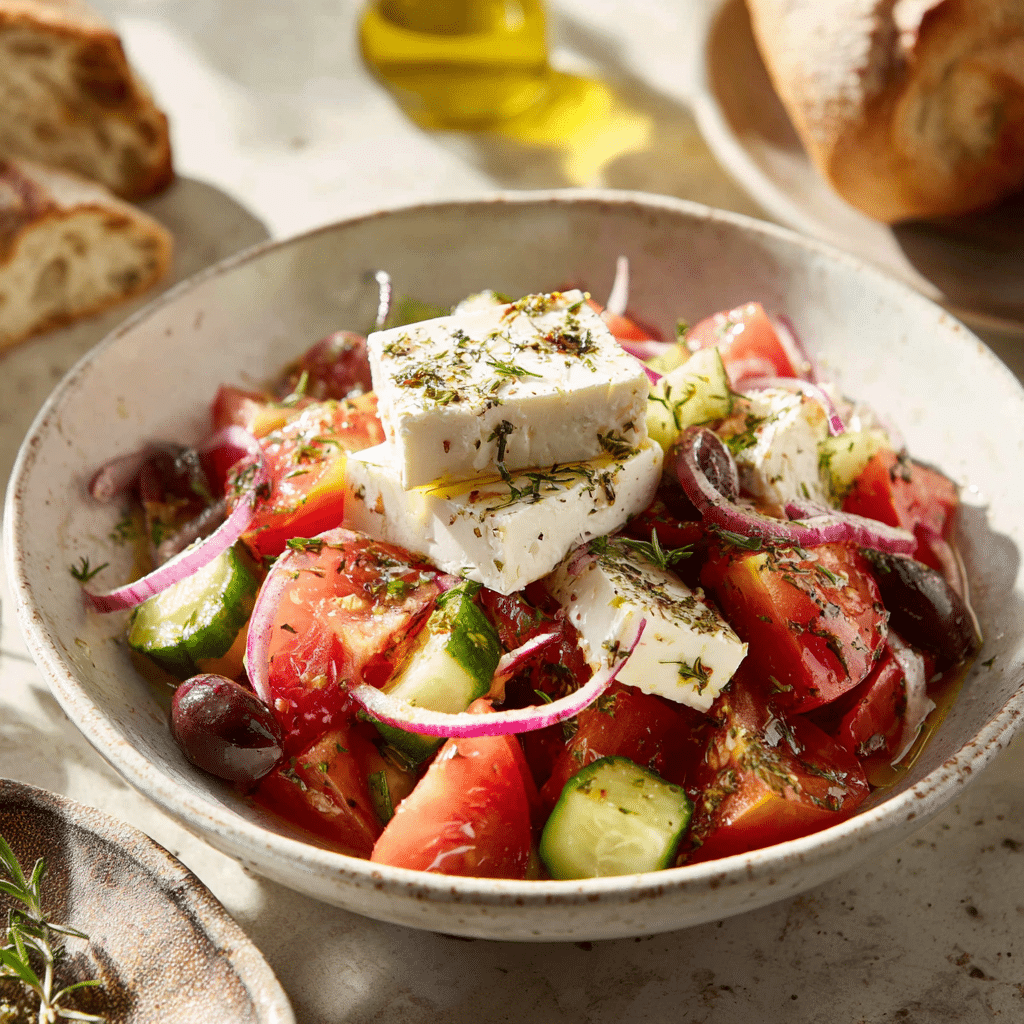
Scatter the Kalamata olives over the vegetables, making sure to distribute them evenly for that perfect salty bite in every forkful. Next, gently place the cubed feta cheese on top; its creamy texture contrasts beautifully with the crisp vegetables and salty olives, providing a luscious richness that is quintessential to the Greek Village Salad (Horiatiki).
Step 4: Dress and Season
Drizzle the olive oil generously all over the salad. The olive oil acts not just as a dressing but a flavor enhancer that ties each ingredient together. Finally, sprinkle the dried oregano evenly to infuse the salad with that unmistakably earthy and aromatic note that transports you directly to a Greek countryside table. No tossing needed — let the salad’s rustic charm shine.
Step 5: Serve Immediately
This salad is best enjoyed fresh to preserve the vibrant flavors and crisp textures. Serve it immediately, ideally with some crusty bread to soak up the beautifully flavored olive oil and juices that gather at the bottom of the bowl. Simple yet utterly satisfying!
How to Serve Greek Village Salad (Horiatiki)
Garnishes
To elevate your Greek Village Salad (Horiatiki), consider garnishing with a few fresh basil or mint leaves for a subtle herbal lift. A sprinkle of freshly cracked black pepper or a dash of lemon zest can brighten the flavors further, adding your personal twist while keeping it authentic and fresh.
Side Dishes
This salad pairs wonderfully with almost any Mediterranean meal. Traditional grilled meats like lamb or chicken kebabs are perfect companions, as are dishes like stuffed grape leaves, tzatziki, or simply warm pita bread. It also works brilliantly as a light lunch on its own when paired with a chilled glass of white wine or sparkling water.
Creative Ways to Present
For a fun twist, assemble your Greek Village Salad (Horiatiki) in individual small bowls or even hollow out a large tomato or cucumber and fill it with the salad for an eye-catching presentation. Layering the salad in a glass trifle dish can also create beautiful visual appeal by showing off the vibrant colors of the ingredients.
Make Ahead and Storage
Storing Leftovers
If you have any leftovers, store the Greek Village Salad (Horiatiki) in an airtight container in the refrigerator. Because of the fresh vegetables and cheese, it’s best eaten within 24 hours to enjoy the crispness and avoid sogginess. Keep the olive oil dressing intact to maintain that fresh, vibrant flavor.
Freezing
Freezing is not recommended for Greek Village Salad (Horiatiki) as the fresh vegetables—especially cucumber and tomatoes—do not maintain their texture after thawing and can become watery and mushy. The salad truly shines when enjoyed fresh.
Reheating
Since this salad is a fresh, raw dish, reheating is unnecessary and not advised. Instead, enjoy it chilled or at room temperature for the best flavor and texture experience.
FAQs
Can I substitute the Kalamata olives with other types of olives?
While Kalamata olives are traditional and give the salad its distinctive flavor, you can use other brined olives if necessary. Just keep in mind that milder olives might change the salad’s characteristic boldness.
Is it necessary to use dried oregano, or can I use fresh?
Both work well! Dried oregano offers a more concentrated and earthy aroma, which is typical in Greek cooking, while fresh oregano will provide a lighter, herbaceous note. Feel free to experiment based on your preference.
Can I add lettuce or other greens to this salad?
Authentic Greek Village Salad (Horiatiki) traditionally does not include lettuce or other greens to maintain its rustic simplicity and texture balance. However, if you’d like more volume or a softer bite, adding some crisp romaine lettuce isn’t unheard of in modern adaptations.
What type of feta cheese is best for Greek Village Salad (Horiatiki)?
Ideally, use authentic Greek feta made from sheep’s or goat’s milk for that authentic tangy and creamy profile. Avoid processed or crumbly feta to get the best flavor and texture.
Can I make this salad vegan or dairy-free?
Absolutely! Simply omit the feta cheese or substitute it with a vegan cheese alternative. The salad will still be vibrant and delicious, though the feta’s creamy saltiness is a key traditional flavor.
Final Thoughts
If you are craving a dish that is fresh, flavorful, and beautifully simple, then the Greek Village Salad (Horiatiki) is a must-try. It offers a wonderful snapshot of Greek culinary tradition with just a handful of quality ingredients that sing together in perfect harmony. Whether you are making it for a quick lunch or as part of a festive meal, this salad promises to bring vibrant energy and joy to your table — give it a try and taste the magic of Greece in every bite!